4.7★ · 185 Google reviews
Pet Dog TrainingIn Glasgow, For FamiliesWho Want An Easier Dog
Reward-based 1-to-1 training for ordinary family dogs, delivered in your home and the streets and parks you use every day. 17+ years of hands-on experience, fully insured, and not a single aversive tool in the kit.
4.7★
Average Google rating
185
Google reviews
17+
Years with dogs
24hr
Enquiry response target
Training for the dog you actually live with
Most people who contact us do not have a dramatic problem. They have a dog they love that pulls to the park, ignores them once the lead is off, barks at the door, cannot settle in the evening and turns a simple walk into a workout. Nothing about that is unusual, and none of it means you have failed. It usually means nobody ever showed the dog what to do instead.
Pet dog training is the everyday end of our work. It sits alongside the behaviour consultancy side, where we deal with fear, reactivity and aggression, and it uses exactly the same method: work out what the dog is getting out of the current behaviour, make the behaviour you want the easier and better-paid option, and stop the old pattern rehearsing itself while the new one goes in.
We come to you. That matters more than it sounds. A dog that is brilliant in a training hall on a Wednesday and impossible on Dumbarton Road on a Saturday has not learned the skill in the place it is needed. Working in your hallway, your close, your street and your local park means the training is tested in the environment that counts from the first session.
Sessions are one-to-one, so the plan fits your household rather than a curriculum. Whoever walks the dog should ideally be there, including teenagers, because a dog will happily learn one set of rules for you and a completely different set for whoever is softer.
What we work on
- A lead walk you can do with a coffee in the other hand
- A recall that works when there is another dog in the field
- A dog that settles in the kitchen instead of pacing
- Calm greetings at the door, without the jumping
- Handling, grooming and vet visits without a fight
- Confidence on buses, in cafés and on Glasgow pavements
If what you are describing is closer to fear, lunging, growling or panic when left, start with aggression and reactivity or separation anxiety instead.
How it works, start to finish
Step 01
Free discovery call
A no-pressure conversation about your dog, your household and what you want daily life to look like. If we are not the right fit, we will say so and point you somewhere better.
Step 02
Initial consultation
Usually in your home or the streets and parks where the problem shows up. We watch your dog, ask about routine, diet, exercise and sleep, and work out what is actually maintaining the behaviour.
Step 03
Your written plan
Plain English, sent after the session, so everyone in the house is doing the same thing. Specific exercises, specific criteria and what to do on the days it does not go well.
Step 04
Follow-up and progression
We build difficulty only when the current step is solid. Sessions continue as long as they are useful and stop when they are not. You will not be sold a package you do not need.
Why reward-based training is the harder, better option
A prong collar or an e-collar will stop a dog pulling. It will also teach the dog that walks hurt, and it will do nothing about why the dog wanted to get there in the first place. Suppression looks like progress because the visible behaviour disappears. What disappears with it is the information you need, which is why dogs trained that way so often produce something worse later, with no warning.
Reward-based training asks more of you at the start. You have to work out what your dog actually wants, carry food you would rather not carry, and accept that the first two weeks involve setting the bar embarrassingly low. In return you get a dog that offers the behaviour rather than avoiding a consequence, which holds up under pressure in a way that avoidance never does.
It also means we will occasionally tell you something you did not want to hear. Some dogs need more sleep, not more training. Some need a vet before a trainer. Some need the walk route changed for a month. Being honest about that is the point of paying for a professional rather than following a video.
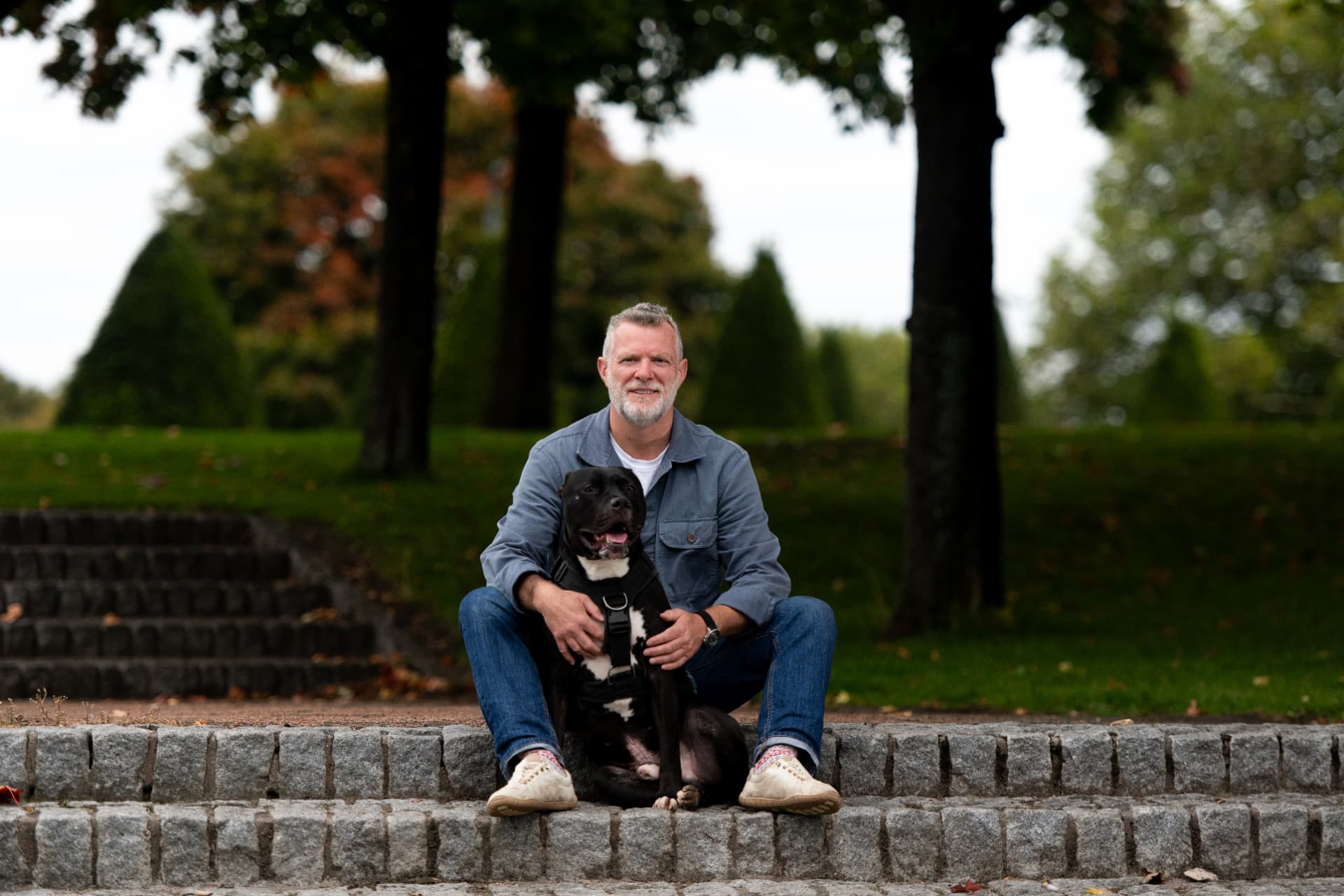
John has spent 17+ years working with dogs across Glasgow and the west of Scotland, teaching seminars and workshops for other trainers and owners, and writing behaviour reports for legal cases. Every session is fully insured, and the whole approach is force-free from start to finish.
Common questions
What counts as pet dog training?
Everyday life skills for a family dog: walking on a lead without pulling, coming back when called, settling in the house, greeting people politely, coping with being left for a normal period and being handled at the vet or groomer. It is the ordinary stuff that makes owning a dog enjoyable rather than exhausting.
Is this different from behaviour work?
Yes. Pet dog training teaches skills. Behaviour work changes how a dog feels about something, and that is what you need for fear, reactivity, aggression or separation problems. Many households need a bit of both, and we will tell you which one your dog needs after the first assessment.
Where do sessions take place?
In your home and the local area you actually walk in, across Glasgow, Greater Glasgow, Lanarkshire, Renfrewshire, Dunbartonshire, Inverclyde, Falkirk and East Ayrshire. Training a dog in a hall and hoping it transfers to your street rarely works, so we train where the behaviour needs to happen. Remote 1-to-1 sessions are available for owners further afield.
What equipment do you use?
A well-fitted harness such as a Perfect Fit or Ruffwear, a comfortable lead, food your dog genuinely likes and, for recall work, a long line. We do not use prong collars, shock or e-collars, slip leads or check chains, and we will not work alongside anyone who does.
How old should my dog be?
Any age. Puppies get the easiest ride because nothing needs undoing, adolescents are the most common group we see, and adult or rescue dogs learn perfectly well. Older dogs are often quicker than owners expect, because they already know how to settle.
How much does it cost?
Pricing depends on the type of session, travel and how much follow-up you need. Contact us for accurate pricing and we will be straight with you about what your case is likely to involve.
How quickly will I see a difference?
Skills like settling and lead walking usually shift within the first two weeks if the plan is followed consistently. Anything with an emotional component takes longer. We would rather give you a realistic timescale than a flattering one.
More reading: dog training advice, all services, areas we cover or about John.
Book your free discovery call
Tell us the breed, the age, what happens and where. We reply within our 24-hour target by email, phone or text with an honest read on what your dog needs.