07790 608841info@glasgowdogtrainer.co.ukMon to Thu 9am to 8:30pm · Fri 9am to 6pm · Sat 9am to 5pm · Sun 9am to 5:30pm
Glasgow Dog Trainer and Behaviour Consultant logo

Advice · Glasgow and the west of Scotland

Dog Training AdviceThat Works On Real DogsIn Real Glasgow Streets

Reward-based, force-free guidance from 17+ years of hands-on behaviour work across Glasgow, Lanarkshire, Renfrewshire and beyond. No jargon, no dominance theory and nothing that relies on hurting or frightening your dog.

Request a ConsultationSee all services
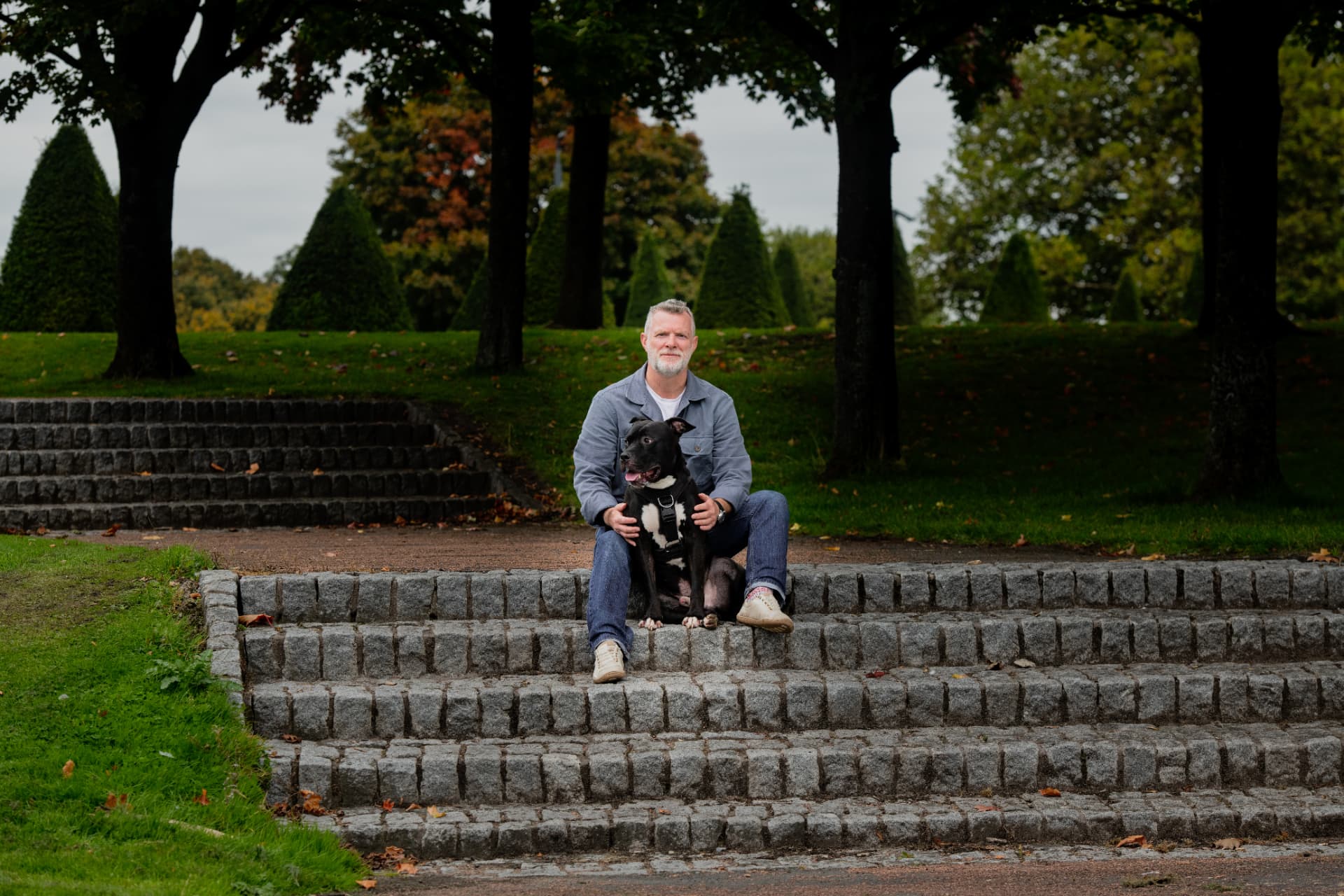
Dog settling calmly on park steps during a Glasgow behaviour consultation

Start here: how to think about your dog's behaviour

Almost every owner who contacts us opens with a label. My dog is aggressive. My dog is anxious. My dog is stubborn. Labels feel like explanations, but they are really just summaries of what you have seen, and they rarely tell you what to do on Tuesday morning when it happens again.

More useful questions are these. What exactly does the dog do? Where and when does it happen, and how close is the trigger? What happens immediately before, and immediately after? What does the dog seem to be trying to achieve, and is it working for them? Behaviour that keeps happening is being reinforced by something, even when that something is simply making a frightening thing go away.

Once you can describe the pattern rather than the label, the plan usually becomes obvious. A dog that lunges at other dogs at ten metres but copes at thirty metres has given you your starting distance. A puppy that toilets indoors twenty minutes after coming in from the garden has given you your timing. A dog that only destroys things when left alone has told you the problem is the absence, not the furniture.

The advice below is organised by the situations Glasgow owners contact us about most. It is genuinely useful on its own, and it is not a substitute for having someone watch your particular dog. Behaviour cases involving bites, real fear or anything that has been going on for months deserve an assessment rather than a guess.
Advice by situation

Puppies and the first six months

Socialisation is exposure at a distance and an intensity your puppy can cope with, not a queue of strangers reaching over their head. Toilet training, settling, handling and separation all belong in the first weeks, because they are far easier to build than to repair.

Puppy training

Adolescence, when the recall falls apart

Between roughly six and eighteen months the world becomes more interesting than you are. Nothing has been undone: the behaviour simply has more competition. Long lines, better reinforcement and fewer chances to practise ignoring you carry most dogs through it.

Adolescent dog training

Lead reactivity and barking at other dogs

A dog lunging and barking on lead is almost always trying to increase distance, not start a fight. Punishing the display suppresses the warning and leaves the feeling underneath. We change the feeling first, then the behaviour follows.

Aggression and reactivity

Fear, noise sensitivity and rescue dogs

A frightened dog needs predictability before it needs training. Fixed routines, safe spaces, choice about being approached and a slow reintroduction to the trigger do more in a fortnight than any obedience drill.

Fearful and anxious dogs

Being left alone

Separation problems are panic, not protest. The work is measured in seconds at first, and the single most common mistake is going back to full-length absences before the dog is genuinely comfortable with short ones.

Separation anxiety

Loose lead walking and recall

Both are paid skills. If walking beside you and coming back to you are less rewarding than pulling ahead or staying out there, the dog is making a reasonable choice. Raise the pay, lower the difficulty, then build back up.

Loose lead walking

The four principles behind every plan we write

Assessment before advice

The same behaviour can have completely different causes. A dog barking at the window out of boredom and a dog barking at the window out of fear need opposite plans, so we start by working out which one is in front of us.

Reward-based, no aversives

No prong collars, no shock or e-collars, no slip leads or check chains. We recommend a well-fitted harness such as a Perfect Fit or Ruffwear and a lead you can actually hold. Suppressing behaviour with discomfort hides information you need.

Change the environment first

Management is not cheating. Blocking the window, changing the walk route or using a stair gate stops the problem rehearsing itself while the training work goes in. Every repetition you prevent is one you do not have to undo.

Small steps, honestly reviewed

Progress is not linear. Bad days happen, and a plan that cannot absorb a bad day is not a plan. We would rather tell you something is not working at week three than let you spend three months on it.

Five mistakes we see most often

  • Flooding a nervous dog: taking a fearful dog to the busy park so they get used to it. Repeated exposure at an overwhelming intensity usually makes fear worse, not better.
  • Waiting for the growl to stop. A growl is information. Punish it and you get a dog that bites without warning.
  • Changing the plan every week after reading something new. Most reward-based plans need two to three consistent weeks before you can fairly judge them.
  • Training only when there is a problem. Five focused minutes on a good day is worth more than twenty minutes of damage control on a bad one.
  • Assuming the dog is being stubborn or dominant. Almost every case we see is a dog that is frightened, over-aroused, under-exercised or simply never taught the thing being asked of it.

When advice is not enough

Get someone in if your dog has bitten or come close to it, if you are managing the problem by avoiding large parts of normal life, if the household disagrees about what to do, or if you have been working on something for a month with no movement. Those are not failures of effort. They are usually a sign that the plan is aimed at the wrong thing.

Anything with a sudden onset deserves a vet visit before a training plan. Pain changes behaviour, and a dog that has become snappy, reluctant on walks or intolerant of handling in a matter of weeks may be telling you something physical.

Where we do work together, sessions happen in your home or in the environments the problem actually occurs in, across Glasgow and the surrounding areas. Remote sessions cover owners further afield. Every consultation ends with a written plan in plain English that the whole household can follow, and we aim to reply to enquiries within 24 hours by email, phone or text. A free, no-pressure discovery call comes first, so you can tell us what is happening and we can be honest about whether we are the right fit.

Next steps: pet dog training in Glasgow, all training and behaviour services, areas we cover or what our clients say.

Tell us what your dog is doing

Breed, age, what happens and where. We reply within our 24-hour target with an honest read on what your dog needs. Reward-based only, fully insured.

Request a ConsultationCall 07790 608841
Call NowEnquire